






“Fight Club” and the philosophy of Nietzsche
Introduction
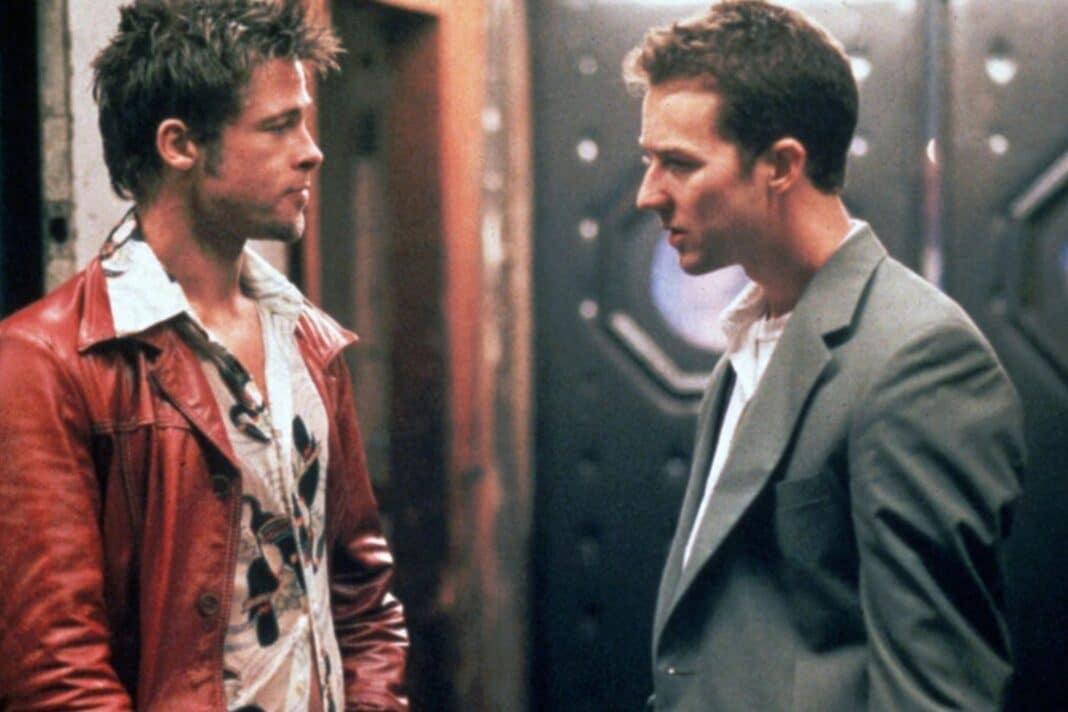
David Fincher’s 1999 film “Fight Club” has triggered numerous interpretations and discussions since its release. One particularly fascinating perspective is the connection to the philosophy of Friedrich Nietzsche. In this article, we examine how the transformations of the mind that Nietzsche describes in “Thus Spoke Zarathustra” are reflected in the film’s protagonist.
The three metamorphoses of the spirit according to Nietzsche
In “Thus Spoke Zarathustra”, Nietzsche outlines three stages of spiritual development.
-
The camel: Symbolizes the person who lives under the burden of social norms and duties and bears them willingly.
-
The lion: Represents the spirit that rebels against imposed values and fights for its own freedom.
-
The child: Stands for the state of innocence and creativity in which a person creates new values and embraces life playfully.
The camel: The burdened spirit
At the beginning of “Fight Club”, the nameless narrator embodies the camel. He leads a monotonous life, characterized by an unloved job and the pursuit of material possessions. His existence is an endless loop of work and consumption that leaves him empty inside. This self-sacrifice and compliance with social expectations correspond to the camel stage, in which man suppresses his own desires and bows to society’s “thou shalt”.
The lion: The rebellious spirit
The encounter with Tyler Durden marks the transition to the lion. Tyler embodies the part of the narrator that rebels against existing values and strives for freedom. By founding the “Fight Club”, the narrator begins to cast off the shackles of society. The lion fights against the “great dragon” of “thou shalt” and tries to establish his own rule in “his own desert sands” by destroying the previous values.
The child: the creative spirit
At the end of the movie, after the narrator has regained control of Tyler Durden, he enters the stage of the child. He is now ready to create new values and look at life from a fresh perspective. The destruction of the loan buildings symbolizes the collapse of the old order and the beginning of a new, self-determined life.
Conclusion
“Fight Club” can be interpreted as a cinematic representation of Nietzsche’s concept of the three metamorphoses of the spirit. The narrator goes through the stages of the camel, lion and child, freeing himself from social constraints and ultimately redefining his own identity and values. This profound philosophical level contributes to the film’s enduring fascination and relevance.